What Is DevOps on AWS? A Beginner’s Complete Guide
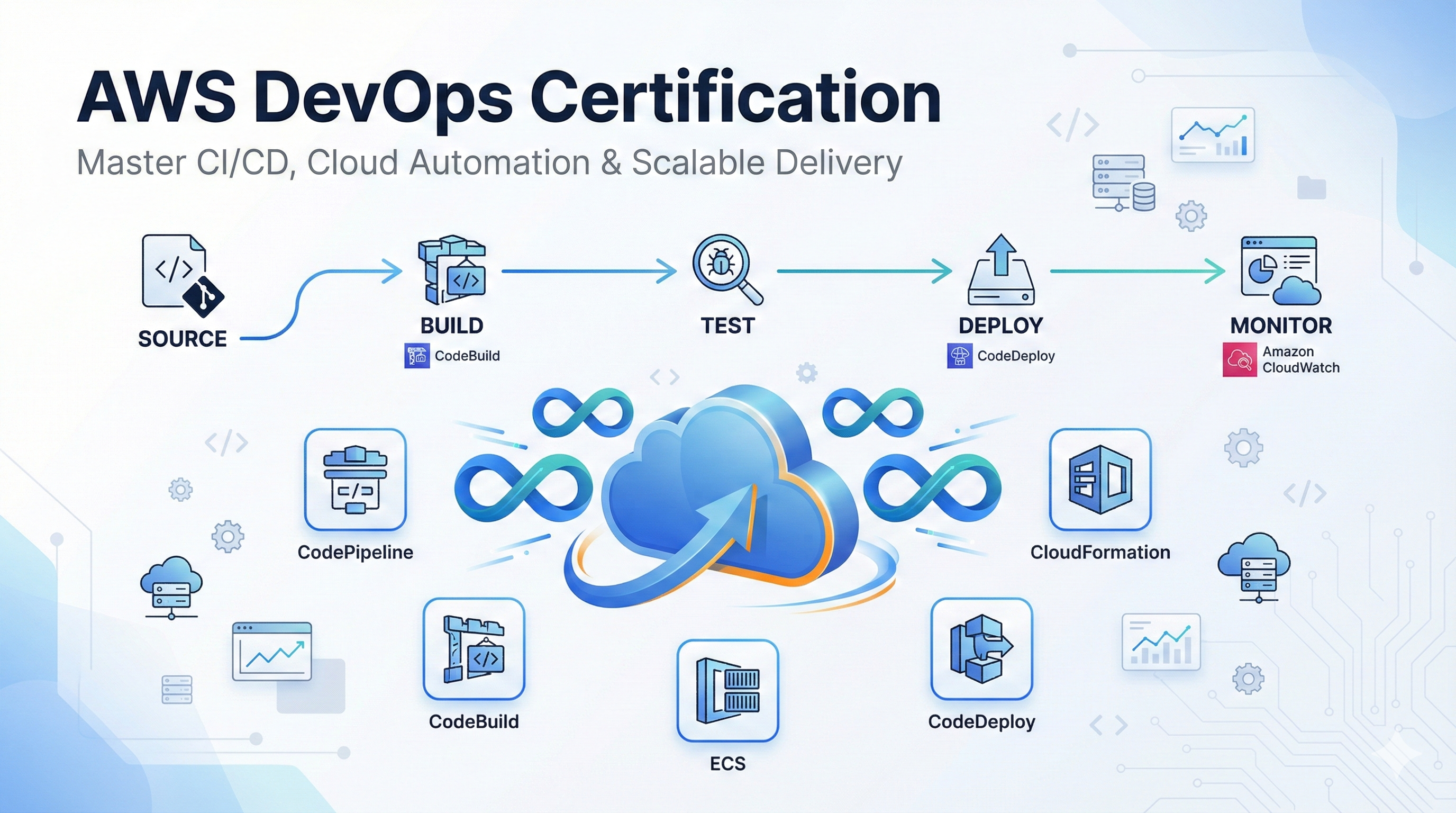
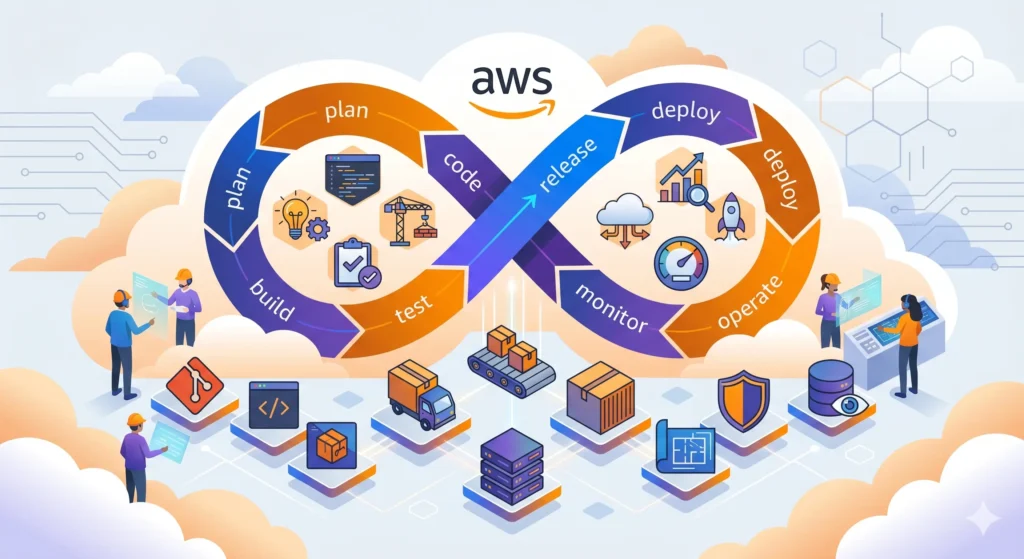
Introduction: Why DevOps on AWS Matters Software teams today are under pressure to release faster, reduce downtime, improve security, and respond quickly to customer needs. Traditional software delivery often separates developers, testers, operations engineers, and security teams into different silos. DevOps changes that model. AWS defines DevOps as a combination of cultural philosophies, practices, and tools that increase an organization’s ability to deliver applications and services at high velocity. The goal is to evolve and improve products faster than traditional software development and infrastructure management approaches. DevOps on AWS means applying DevOps principles using Amazon Web Services cloud infrastructure and AWS-native services. AWS says its DevOps services help teams provision infrastructure, deploy application code, automate release processes, and monitor application and infrastructure performance. For beginners, DevOps on AWS can sound complex because it includes cloud computing, automation, CI/CD, monitoring, security, containers, serverless computing, and infrastructure as code. But at its core, it answers a simple question: How can a team build, test, deploy, monitor, and improve software faster and more reliably? This guide explains DevOps on AWS from the ground up — covering everything from the basic question of what is DevOps to advanced deployment strategies and career opportunities. What Is DevOps? What is DevOps? It is a software delivery approach that brings development and operations teams closer together. Instead of developers writing code and “throwing it over the wall” to operations teams, DevOps encourages shared ownership across the entire software lifecycle. A DevOps team typically focuses on: DevOps Area What It Means Collaboration Developers, operations, QA, and security teams work together Automation Repetitive tasks like testing, building, deployment, and provisioning are automated Continuous Integration Code changes are frequently merged and tested Continuous Delivery Software is kept in a deployable state Monitoring Applications and infrastructure are continuously observed Feedback Teams use data, logs, alerts, and customer feedback to improve systems Atlassian describes continuous integration as the practice of automating the integration of code changes from multiple contributors into one software project, with automated builds and tests verifying the changes. In simple terms: DevOps is not just a toolset. It is a way of working. What Is AWS? AWS, or Amazon Web Services, is Amazon’s cloud computing platform. It provides on-demand computing resources such as servers, databases, storage, networking, security, analytics, machine learning, and developer tools. Instead of buying physical servers, companies can use AWS to rent cloud resources when needed. This allows businesses to scale applications, reduce infrastructure overhead, and automate many operational tasks. For DevOps, AWS is important because it provides managed services for: DevOps Need AWS Services Source control AWS CodeCommit, GitHub integration, Bitbucket integration Build automation AWS CodeBuild Deployment automation AWS CodeDeploy Pipeline orchestration AWS CodePipeline Infrastructure as Code AWS CloudFormation, AWS CDK Monitoring Amazon CloudWatch Containers Amazon ECS, Amazon EKS, Amazon ECR Serverless deployments AWS Lambda, AWS SAM Security and access AWS IAM, AWS Secrets Manager, AWS KMS Logging and auditing Amazon CloudWatch Logs, AWS CloudTrail AWS Developer Tools help teams host code, build, test, and deploy applications using CI/CD services and development tooling. What Is DevOps on AWS? DevOps on AWS is the practice of using AWS cloud services, automation, CI/CD pipelines, monitoring tools, and security controls to build, test, release, and operate software efficiently. A beginner-friendly definition: DevOps on AWS means using AWS tools and cloud services to automate the software delivery lifecycle — from code commit to production deployment and monitoring. Here is the basic AWS DevOps lifecycle: Developer writes code → Code is pushed to a repository → CI/CD pipeline starts automatically → Code is built and tested → Application is deployed to AWS → Monitoring tools track performance → Feedback improves the next release Why Learn DevOps on AWS? AWS DevOps is a valuable skill because many organizations use AWS to host applications and need professionals who can automate cloud-based software delivery. When students ask what is DevOps and why it matters for a cloud career, the answer is straightforward: AWS DevOps connects coding, automation, cloud infrastructure, and operations into a single, in-demand skill set. Whether you are just starting out or looking to advance, choosing to learn AWS DevOps is one of the most practical steps you can take toward a high-growth technology career. Learning DevOps on AWS helps beginners understand how modern software companies work. It combines cloud computing, automation, coding, infrastructure, security, and operations. Benefit Explanation Faster releases CI/CD pipelines reduce manual deployment work Better reliability Automated testing and deployment reduce human error Scalability AWS services can scale infrastructure based on demand Improved collaboration Teams share responsibility for development and operations Better monitoring CloudWatch and related tools provide visibility into systems Cost control Automation helps reduce wasted resources Security integration IAM, KMS, Secrets Manager, and policy controls support DevSecOps AWS CodePipeline, for example, automates the build, test, and deploy phases of the release process whenever code changes occur. DevOps vs AWS DevOps: What Is the Difference? Topic DevOps DevOps on AWS Meaning A culture and set of practices for faster software delivery DevOps practices implemented using AWS services Scope Can be used on any cloud or on-premises infrastructure Focused on AWS cloud infrastructure and AWS-native tools Tools Jenkins, GitHub Actions, GitLab CI, Docker, Kubernetes, Terraform, etc. CodePipeline, CodeBuild, CodeDeploy, CloudFormation, CloudWatch, ECS, EKS, Lambda Goal Improve software delivery speed, quality, and reliability Improve software delivery using AWS automation and managed services DevOps is the method. AWS is one platform where that method can be implemented. Core Concepts Beginners Must Know 1. Continuous Integration Continuous Integration, or CI, means developers frequently merge code changes into a shared repository. Each change triggers automated builds and tests. Atlassian describes CI as a DevOps best practice where developers routinely integrate code changes into the main branch and test changes early and often. Example: A developer pushes new code to GitHub. AWS CodeBuild automatically runs tests. If tests fail, the team fixes the issue before deployment. 2. Continuous Delivery Continuous Delivery means software is always kept in a deployable state. Code can
What Is DevOps on AWS? A Beginner’s Complete Guide Read More »